Top 11 Hetzner Alternatives for Cloud Computing in 2026

By Maddy Osman
Senior Content Marketing Manager at DigitalOcean
- Updated:
- 21 min read
Selecting the ideal cloud provider can unlock scalability, efficiency, and innovation. Conversely, a poor choice can result in higher costs, complexity, and missed opportunities. From data management to customer experience, cloud hosting has a direct impact on your operations. Hetzner, a popular cloud service provider, offers budget-friendly compute solutions. Hetzner offers industry-leading price-to-performance for raw compute. However, developers who require high-level abstractions—such as a managed App Platform for code-to-cloud deployment or a more extensive variety of managed data stores—may find Hetzner’s specialized catalog more limiting than a broader ecosystem like DigitalOcean.
While Hetzner excels in affordability for compute resources within these regions, businesses seeking a wider range of services or global reach may want to consider other options. Let’s explore the top Hetzner alternatives in 2026, including both hyperscalers like AWS, Azure, and GCP offering vast infrastructure for large deployments, and alternative providers specializing in cost-effective or niche solutions.
Key takeaways:
-
Hetzner alternatives span both specialized providers and hyperscalers, giving teams options that range from low-cost infrastructure to fully managed, global cloud platforms depending on scale and complexity.
-
Compared to Hetzner’s compute-focused model, alternatives often provide integrated platform services and AI tooling designed to streamline the deployment pipeline. These managed services allow developers to focus on code rather than infrastructure management.
-
When choosing a Hetzner alternative, evaluate factors like total cost of ownership (including egress fees), availability of managed services, geographic coverage, scalability, compliance requirements, and customer support quality.
-
Top Hetzner alternatives include DigitalOcean, OVHcloud, Vultr, Linode (Akamai Cloud), Scaleway, Amazon Web Services (AWS), Microsoft Azure, Google Cloud Platform (GCP), Oracle Cloud Infrastructure (OCI), IBM Cloud, and Alibaba Cloud.
What is Hetzner?
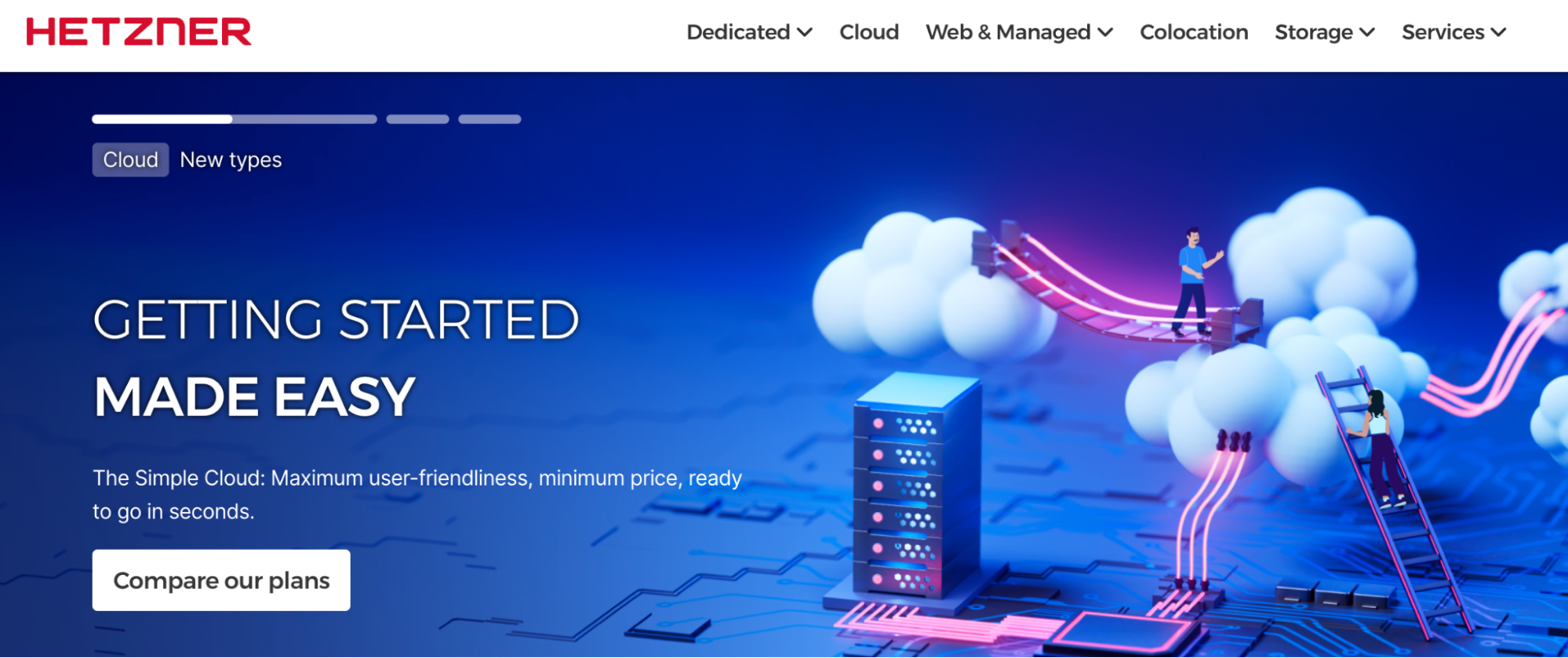
Hetzner is a European cloud and hosting provider offering virtual machines, dedicated servers, and bare-metal infrastructure with usage-based pricing. Its cloud portfolio spans shared and dedicated vCPU instances alongside physical servers, giving customers a choice between virtualized environments and direct hardware access. Hetzner provides cloud infrastructure in locations in the United States and Singapore alongside its core European footprint (Germany and Finland), though its own owned data center parks are primarily in Europe. Hetzner typically appeals to teams that prefer greater infrastructure control and are comfortable managing more of the stack themselves.
Hetzner key takeaways:
-
Support for provisioning single-tenant dedicated root servers alongside virtual cloud instances, enabling workloads to run directly on reserved physical hardware without a virtualization layer.
-
Cloud Volumes that can be attached and detached independently of compute instances, providing persistent block storage that is decoupled from server lifecycles.
-
A native Hetzner Cloud Load Balancer service for distributing inbound traffic across multiple instances using managed, network-level load balancing.
Hetzner pricing:
-
Cloud Servers: $4.09/month starting for CX23 cost-optimized shared vCPU instances with 2 vCPUs, 4 GB RAM, 40 GB NVMe SSD, and 20 TB included traffic
-
Dedicated GPU Servers: $205/month plus $88 setup fee starting for NVIDIA RTX 4000 SFF Ada (GEX44)
Hetzner’s pricing can be appealing—but it often comes with more hands-on management as you scale. If you’re looking built-in managed services like Kubernetes and databases with transparent pricing, DigitalOcean offers a simpler path. See how the two compare in our DigitalOcean vs Hetzner breakdown.
How to choose a Hetzner alternative
Selecting a cloud GPU provider is a decision that can have ripple effects throughout your operations. Consider these factors when comparing Hetzner alternatives:
-
Security and compliance: Look for security certifications (e.g., SOC 2, ISO 27001) and stated data governance practices. Ensure their policies align with relevant industry standards and data privacy regulations (e.g., GDPR, CCPA) to safeguard your sensitive information.
-
Scalability: Evaluate the technology roadmap and service offerings to ensure they can scale up and down with your evolving needs, including managed databases, Kubernetes, and serverless options
-
Reliability and performance: Investigate uptime history, performance benchmarks, and disaster recovery protocols to ensure consistent service delivery that minimizes downtime and potential disruptions.
-
Vendor lock-in and portability: Analyze contract terms, data portability options, and migration support to avoid getting locked into a restrictive vendor ecosystem. Consider the ease of migrating your data and applications to a different provider if needed.
-
Total cost of ownership (TCO): Evaluate egress costs associated with moving data out of the cloud provider’s network, as these can impact the cloud total cost of ownership. Additionally, review pricing models (such as pay-as-you-go, reserved instances), service-level agreements (SLAs) that outline performance guarantees, and ongoing costs associated with storage, and support.
Business health and company profile: Research financial stability, industry reputation, and track record of customer service. Find additional insights from unbiased third parties in online forums and review platforms.
Top Hetzner alternatives for 2026
Alternatives to Hetzner include specialized providers like DigitalOcean, and hyperscalers such as AWS and GCP. Let’s consider how each option compares:
| Solution | Best for* | Key features | Pricing |
|---|---|---|---|
| Hetzner | Budget-friendly core compute in Europe and North America | Low-cost cloud VMs, dedicated root servers, attachable cloud volumes, native load balancer | Compute from $4.09/mo; GPU servers from $205/mo (+$88 setup) |
| DigitalOcean | Digital-native enterprises, AI-native businesses, and developers | Managed databases, Kubernetes with managed control plane, App Platform PaaS, Gradient™ AI with GPU compute | Compute from $4/mo; App Platform from $5/mo; GPUs from $3.39/hr |
| OVHcloud | European enterprises needing dedicated or private cloud | Dedicated servers, VMware-based private cloud, public cloud compute, vRack private networking | Compute from $8.59/mo; GPUs from $4.59/hr |
| Vultr | Self-managed, performance-focused workloads | Cloud VMs, bare metal servers, custom ISO support, GPU instances | Compute from $5/mo; GPUs from $2.99/hr |
| Linode (Akamai) | Developers wanting predictable pricing with edge integration | Virtual machines, LKE managed Kubernetes, Akamai App Platform, GPU instances | Compute from $5/mo; GPUs from $0.52/hr |
| Scaleway | Cost-conscious European cloud deployments | Multi-AZ European regions, bare metal servers, serverless containers, GPU compute | Compute from €0.10/mo; GPUs from €2.52/hr |
| AWS | Large-scale and complex enterprise workloads | EC2 compute, S3 object storage, App Runner, AI services (SageMaker, Bedrock) | Compute from $6.13/mo; GPUs from $6.88/hr |
| Microsoft Azure | Organizations embedded in the Microsoft ecosystem | Azure VMs, App Service PaaS, Azure AI Foundry, Windows-native tooling | Compute from $6.13/mo; GPUs from $8.82/hr |
| GCP | Data-, analytics-, and AI-driven workloads | Compute Engine, App Engine, BigQuery analytics, Vertex AI | Compute from $6.11/mo; GPUs from $88.49/hr |
| Oracle (OCI) | Oracle-centric and hybrid enterprise environments | OCI Compute, managed Kubernetes (OKE), hybrid cloud integrations | Compute from ~$7.00/mo; GPUs from ~$2.40/hr |
| IBM Cloud | Regulated industries needing hybrid cloud governance | Hybrid cloud platform, VPC virtual servers, Kubernetes service, watsonx AI | Compute from $53.29/mo; GPUs from $85/hr |
| Alibaba Cloud | Asia Pacific and China-focused deployments | ECS compute, Serverless App Engine, regional compliance alignment, AI services | Compute from $4.55/mo; GPUs from $2.26/hr |
Specialized providers
Specialized providers, characterized by their unique focuses and agility, offer distinct advantages such as personalized customer support, transparent pricing models, and customized solutions.
1. DigitalOcean for digital-native enterprises, AI-native businesses, and developers
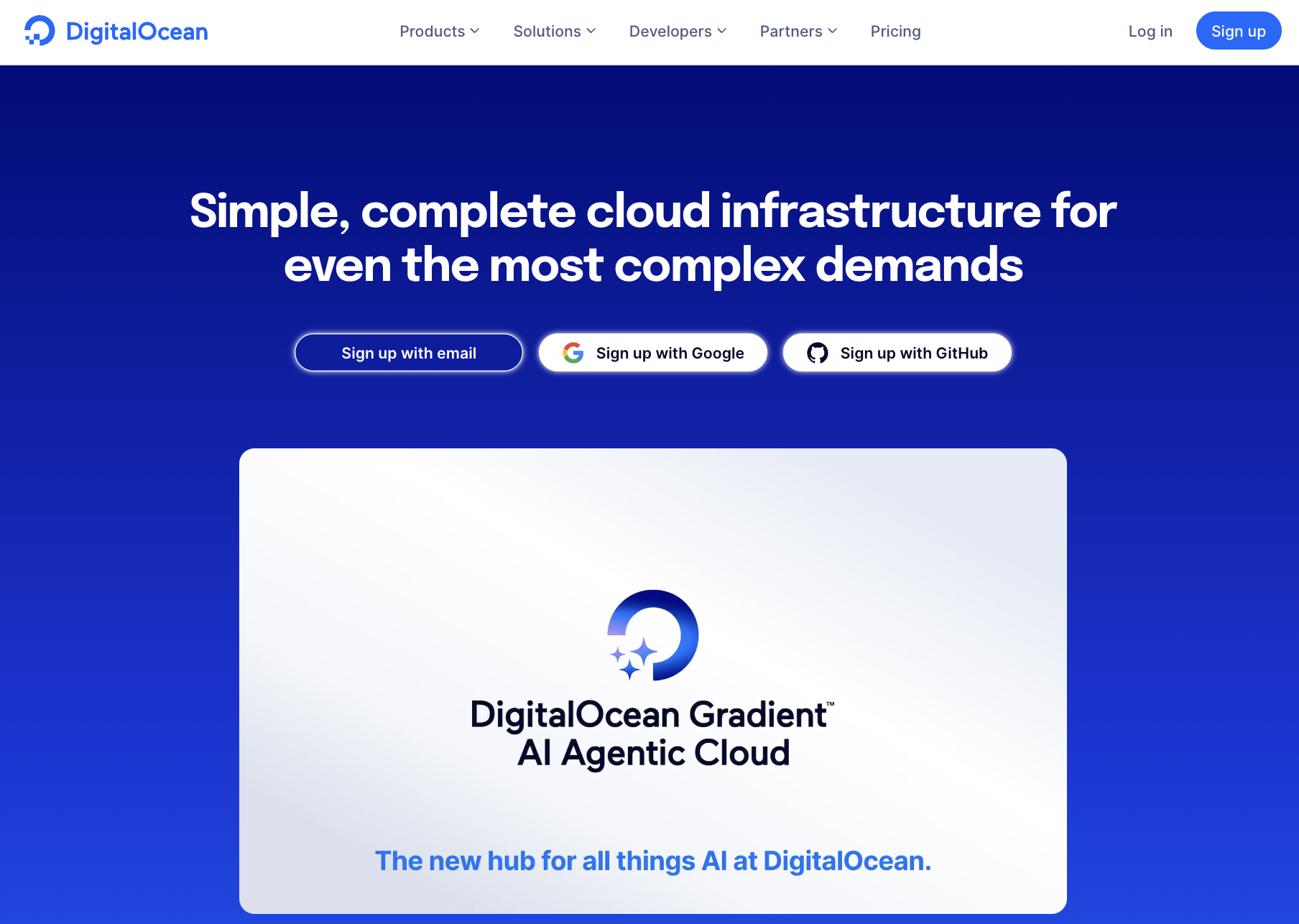
DigitalOcean is a cloud platform built for digital-native enterprises that prioritize developer velocity, predictable pricing, and fast deployment. The platform provides virtual machines, managed databases, Kubernetes, and a platform-as-a-service option through App Platform, which supports deploying applications directly from source repositories without managing underlying infrastructure. DigitalOcean backs its core services with a 99.99% uptime SLA and 24/7 support, aligning with the reliability expectations of production workloads.
Its AI offering centers on Gradient™ AI, combining GPU infrastructure and managed tooling for building, training, and deploying AI agents and models. Together with one-click application deployments and a curated service catalog, DigitalOcean brings cloud and AI capabilities together in an integrated, developer-focused platform.
DigitalOcean key features:
-
Managed Databases for engines such as PostgreSQL, MySQL, Redis, and MongoDB, with automated backups, patching, and replication handled at the platform level rather than by the user.
-
Container orchestration via DigitalOcean Kubernetes that includes a maintained control plane and native integrations with networking, storage, and identity features.
-
Integrated AI infrastructure and tooling through Gradient™ AI, combining on-demand GPU compute with workflows for building, deploying, and operating AI models and AI agents.
DigitalOcean pricing:
-
Droplets: $4/month starting for basic VMs with 512 MiB memory, 1 vCPU, 10 GiB SSD, and 500 GiB transfer
-
App Platform: $0 for static sites; $5/month starting for basic web apps with automatic scaling and built-in CI/CD
-
GPU Droplets: $3.39/GPU/hour on-demand for NVIDIA H100 GPU instances, or $1.99/GPU/hour with a 12-month commitment
2. OVHcloud for European enterprises needing dedicated or private cloud
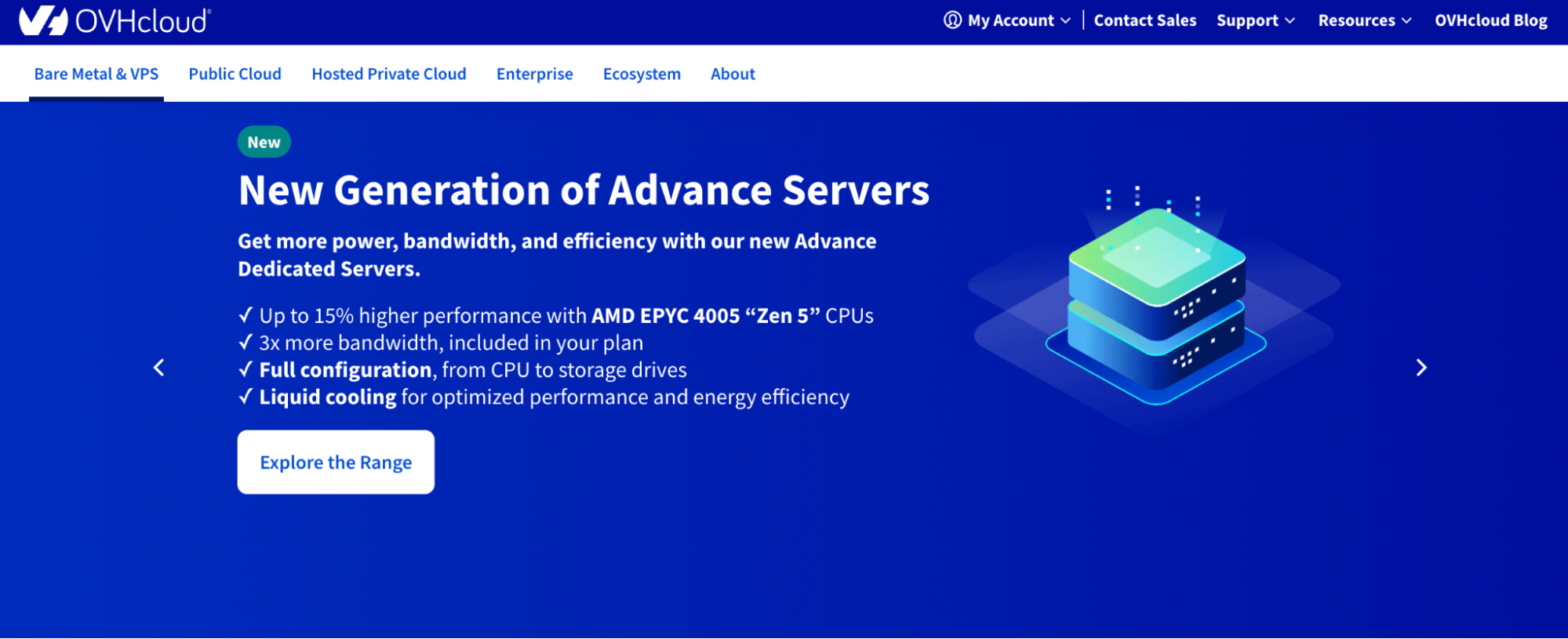
OVHcloud is a European cloud provider offering VPS hosting, public-cloud compute, and dedicated-server options for teams that want configurable infrastructure. Its public cloud plans support on-demand compute, storage, and networking, while its dedicated and hosted private cloud services give customers more control over hardware and virtualization environments. These offerings make OVHcloud a fit for organizations that prefer a mix of shared and isolated infrastructure rather than a single deployment model. Compared with providers focused primarily on lightweight public cloud workflows, OVHcloud’s approach can require more involvement in setup and management. Compared to Hetzner, it provides a broader range of private- and dedicated-infrastructure choices, though with similar expectations of hands-on configuration.
OVHcloud provides GPU-backed infrastructure and managed AI services designed to support model training and experimentation, including AI Training GPUs and hosted AI notebooks. These offerings are positioned as extensions of its public cloud and dedicated infrastructure, rather than as a fully abstracted or end-to-end managed AI platform.
OVHcloud key features:
-
Dedicated servers and hosted private cloud offerings, including VMware-based virtualization, for single-tenant and isolated infrastructure deployments.
-
Public cloud service with on-demand compute integrated with block storage, object storage, and private networking.
-
vRack private networking for interconnecting public cloud resources, dedicated servers, and private cloud environments within a unified network fabric.
OVHcloud pricing:
-
Public Cloud Instances: $8.59/month starting for shared-resource instances with 2 GB RAM, 1 vCore, and 25 GB storage
-
AI Training GPUs: $4.59/hour starting for NVIDIA H100 GPU instances
OVHcloud’s regional footprint and intricate pricing can create hurdles when you’re evaluating providers for globally distributed workloads. If you’re looking for simpler tooling, predictable costs, and a platform that scales more seamlessly across regions that may work better for your business needs, explore our guide to OVHcloud alternatives.
3. Vultr for self-managed, performance-focused workloads
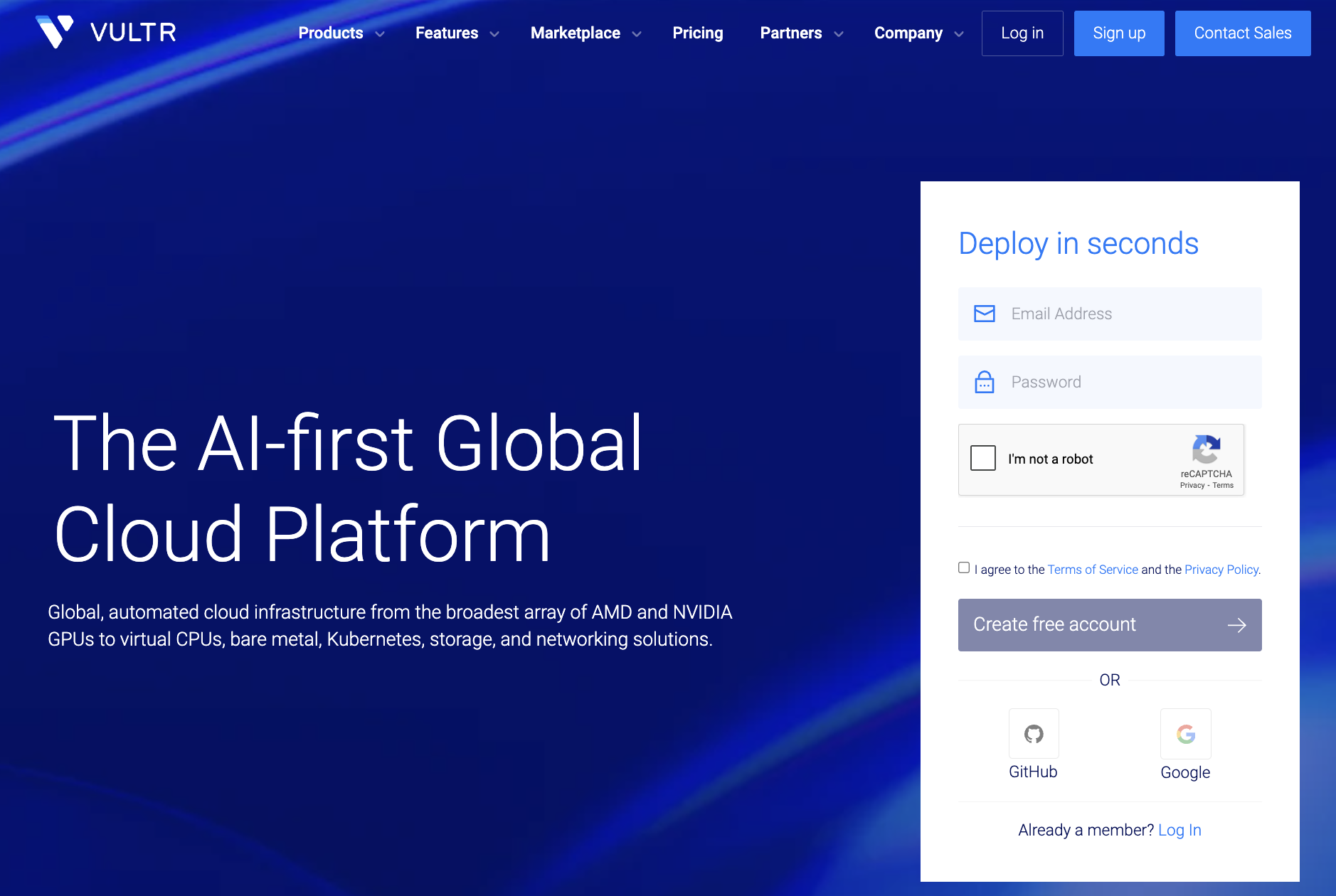
Vultr is a cloud infrastructure provider focused on virtual machines, bare metal servers, and GPU instances for users who prefer direct control over their environments. The platform emphasizes straightforward provisioning and a broad data center footprint, appealing to teams running performance-sensitive or self-managed workloads. Vultr’s service catalog centers on core infrastructure rather than higher-level managed platforms, which aligns with use cases that favor hands-on configuration and operational control. Compared with providers offering broader managed services and platform tooling, Vultr maintains an infrastructure-first approach, prompting many teams to evaluate Vultr alternatives when comparing ecosystem depth and long-term scalability.
Vultr key features:
-
Cloud compute and bare metal servers that support custom images and ISO uploads, giving teams control over operating systems and runtime configuration.
-
Cloud GPU options spanning virtualized and dedicated GPU deployments, supporting accelerator-backed workloads that require different isolation and performance models.
-
Global data center footprint with selectable regions for compute and GPU instances, allowing teams to deploy latency-sensitive or region-specific workloads closer to end users.
Vultr pricing:
-
Cloud Compute: $5/month starting for Shared CPU with 1 GB RAM, 1 vCPU, 25 GB SSD
-
GPU instances: $2.99/hour on-demand for NVIDIA H100 GPU instances
Evaluating Hetzner alongside Linode or Vultr? While Hetzner is known for high-performance raw compute, DigitalOcean offers an ecosystem of managed services, including a wider variety of managed databases, a fully integrated Kubernetes service (DOKS), and an intuitive App Platform for rapid scaling. Check out our guide to DigitalOcean vs Linode vs Vultr.
4. Linode (now Akamai Cloud) for developers wanting predictable pricing with edge integration
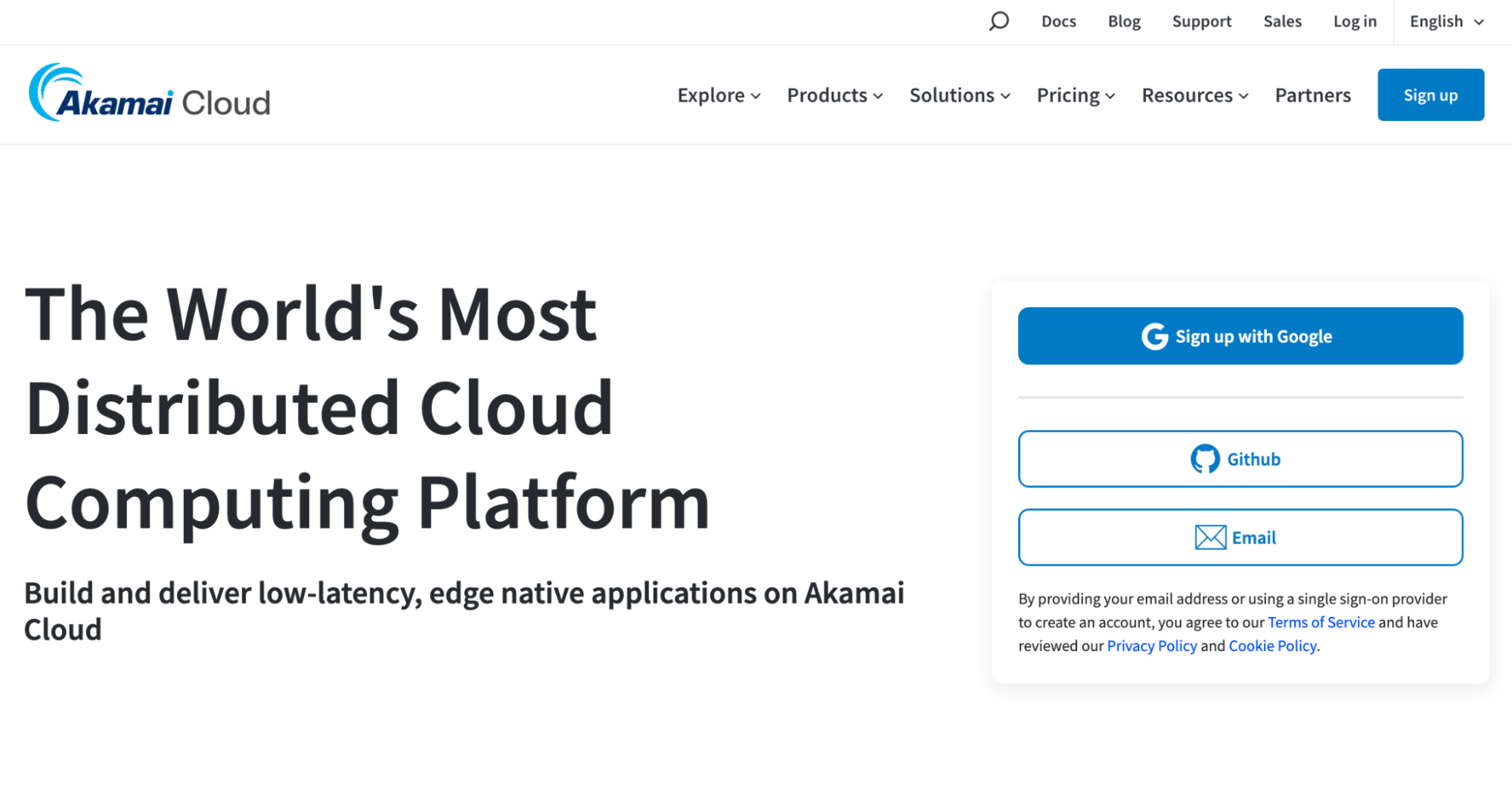
Linode (now part of Akamai Cloud) is a cloud infrastructure provider centered on virtual machines, storage, and networking for developers and small teams. Since its acquisition by Akamai, the platform has increasingly aligned with edge and content delivery use cases while maintaining its core cloud offerings. Linode supports containerized applications and managed databases for common web and application workloads without the breadth of a hyperscaler service catalog. Its overall service scope and tooling remain relatively streamlined compared with larger cloud platforms. This offering suits teams that prioritize simplicity and predictable infrastructure, while organizations seeking broader managed services or platform-level tooling may consider other alternatives.
Linode (Akamai Cloud) offers on-demand NVIDIA GPU instances intended for inference, media processing, and model training workloads. These GPU resources are provided as part of its core compute services and are not coupled with a dedicated managed machine learning or agent development platform.
Linode key features:
-
Core virtual machine offerings paired with object storage and block storage for running general-purpose application and web workloads.
-
Container orchestration through Linode Kubernetes Engine (LKE), providing a managed control plane for deploying and operating containerized applications.
-
Higher-level deployment via the Akamai App Platform, which layers application tooling on top of Kubernetes for teams standardizing on container-based workflows.
Linode pricing:
-
Compute: $5/month starting for Nanode 1 GB Shared CPU with 1 GB RAM, 1 CPU, 25 GB storage, and 1 TB transfer
-
Akamai App Platform: $0 (free); runs on LKE infrastructure with consumption-based pricing for underlying compute resources
-
GPU Instances: $0.52/hour ($350/month) for RTX 4000 Ada; $1.50/hour ($1,000/month) for Quadro RTX 6000
Linode’s post-acquisition shifts have left many teams reassessing their options—especially when pricing changes or hardware gaps slow down growth. If you’re looking for clearer costs, stronger GPU availability, and a platform that keeps developers front and center to better meet your business needs, explore our guide to Linode alternatives.
5. Scaleway for cost-conscious European cloud deployments
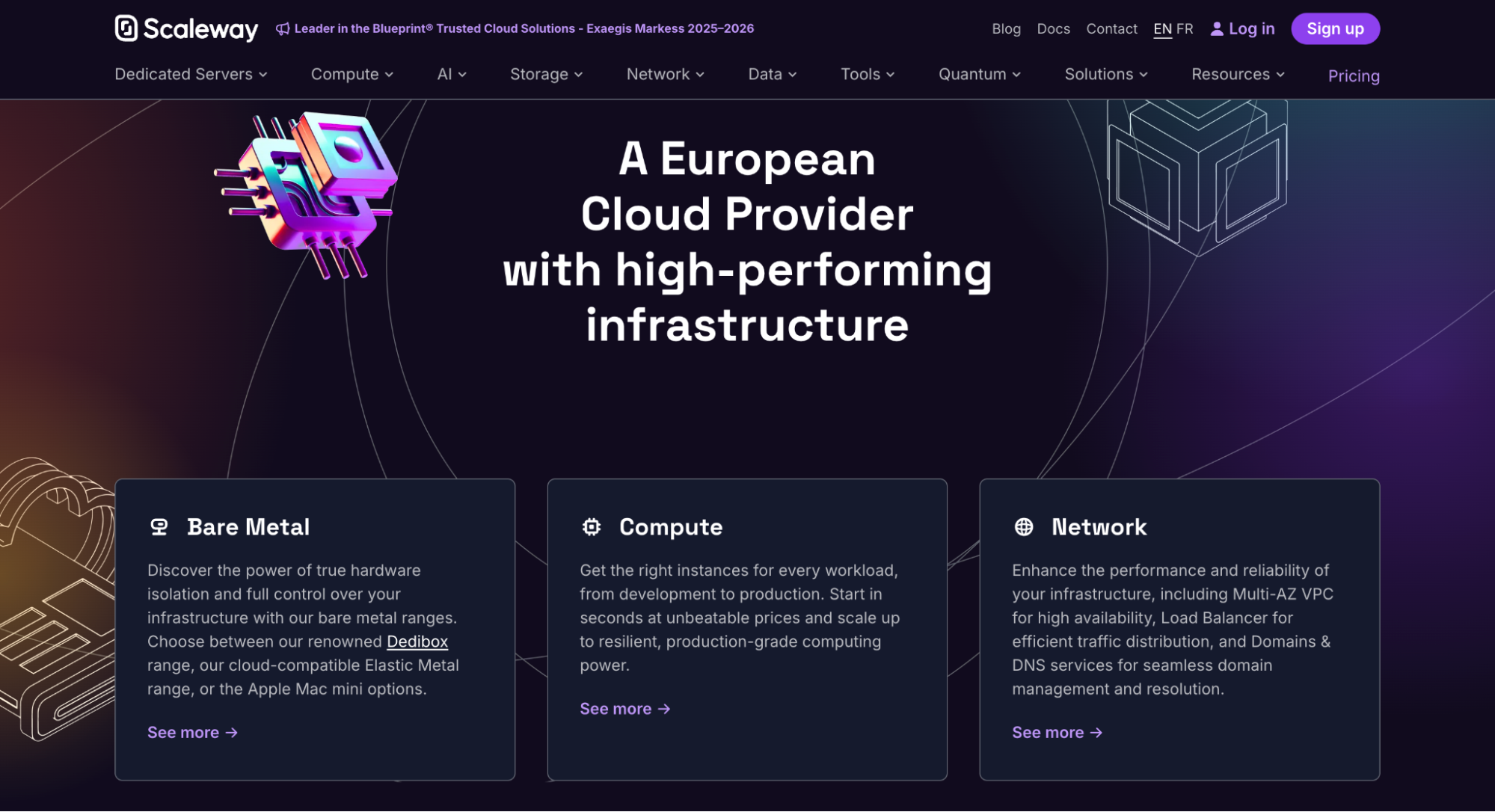
Scaleway is a European cloud provider that offers infrastructure services aimed at developers and teams running hands-on workloads. Its platform includes virtual instances, dedicated bare-metal servers, and container-based services, allowing users to choose between shared and fully isolated infrastructure. Scaleway places an emphasis on flexibility and direct infrastructure control, which can suit teams comfortable managing their own configurations. While it operates multiple data centers in Europe, its regional footprint is more limited than that of global hyperscalers. As a result, Scaleway is often considered by organizations prioritizing cost control and European hosting, rather than broad geographic reach or deeply managed cloud services.
Scaleway provides GPU instances and supporting services for AI and machine learning workloads, including infrastructure for model training, inference, and experimentation. These capabilities are offered as infrastructure-level resources within its public cloud, with users responsible for managing frameworks, pipelines, and lifecycle tooling.
Scaleway key features:
-
Multi–Availability Zone architecture in select regions, supporting zone-level isolation and fault-tolerant application design within the Scaleway Public Cloud.
-
Native container tooling beyond Kubernetes, including Scaleway Serverless Containers and Serverless Functions, for running workloads without provisioning or managing servers.
-
Integrated networking and storage primitives that interoperate across Scaleway’s compute, bare metal, and serverless services.
Scaleway pricing:
-
Virtual Instances: €0.10/month for STARDUST1-S Development Instance with 1 vCPU, 1 GB RAM, and 100 Mbps bandwidth
-
GPU Instances: €2.52/hour for NVIDIA H100 GPU instances
Scaleway, like Hetzner, keeps its infrastructure tightly concentrated in Europe—great for regional workloads, but may be limiting when you need broader deployment options. If global reach, round-the-clock support, and wider tooling compatibility are part of your roadmap, see how DigitalOcean stacks up in our guide to DigitalOcean vs Scaleway.
Hyperscalers
Hyperscaler cloud providers are well-known global entities with extensive cloud services, robust infrastructure, and widespread data center networks. these providers offer comprehensive tools tailored to complex business needs. However, digital native enterprises, startups, and individual developers may find their intricate product offerings and opaque pricing challenging. Key hyperscalers include:
6. AWS for large-scale and complex enterprise workloads
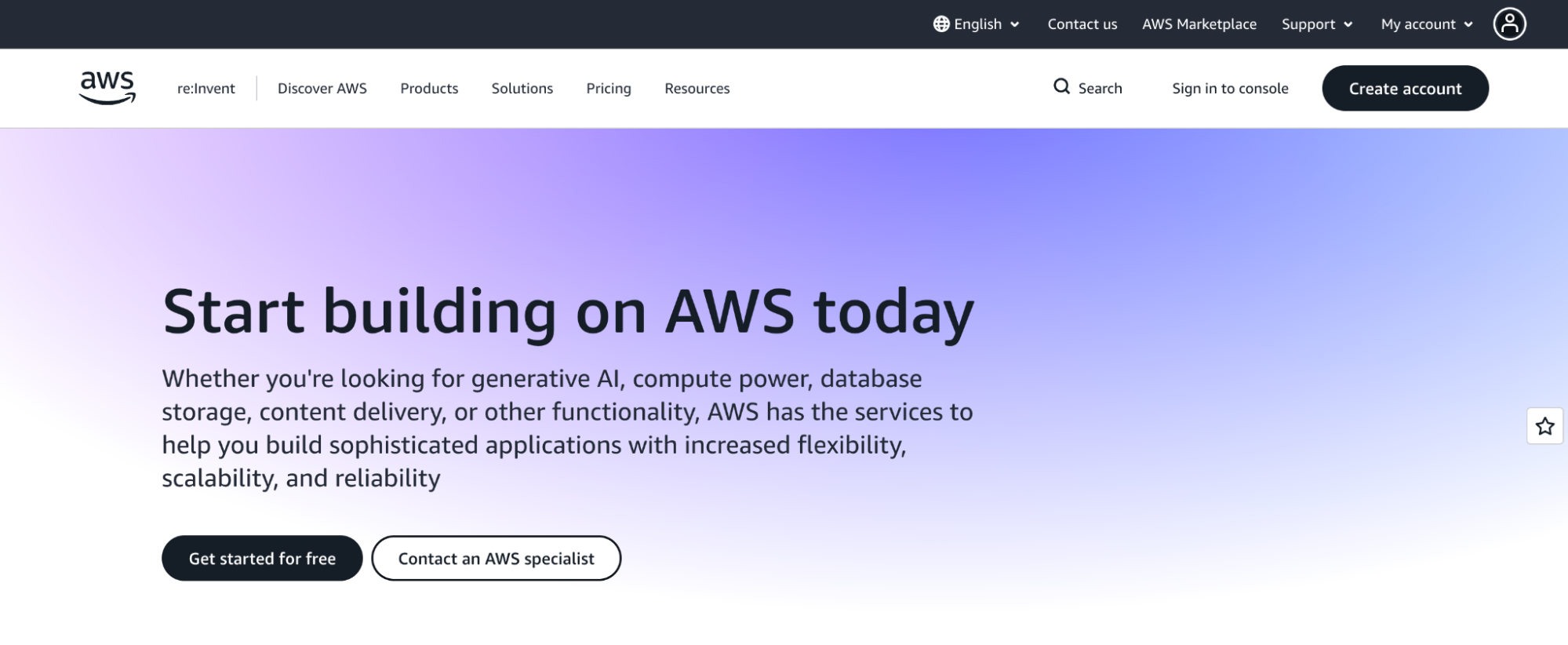
Amazon Web Services (AWS) is a broad cloud platform that provides compute, storage, database, and application services across a globally distributed infrastructure. Its catalog includes offerings such as EC2 for virtual machines, S3 for object storage, and a variety of managed services that cover application hosting, data processing, and machine learning. The scale and depth of this service portfolio give customers extensive configuration options, but they also contribute to a learning curve around cost planning and service selection. AWS support is available through paid support tiers, which may influence how smaller teams or cost-sensitive users interact with the platform. Compared to Hetzner, AWS represents an expansive ecosystem with far more service variety, though with greater complexity than infrastructure-focused providers.
AWS offers a broad set of managed AI and machine learning services that span model development, training, and deployment, alongside GPU-backed compute infrastructure. These services are integrated across the wider AWS ecosystem, allowing AI workloads to be combined with data, application, and identity services at a global scale.
AWS key features:
-
Modular service architecture spanning compute, storage, databases, analytics, and application services, with components such as Amazon EC2 and Amazon S3.
-
Multiple application deployment models, including container-based and fully managed runtimes through services like AWS App Runner and managed container orchestration, supporting a range of operational preferences.
-
Managed data and machine learning services, including Amazon SageMaker and Amazon Bedrock, integrated with core infrastructure and identity services across regions.
AWS pricing:
-
EC2 instances: $6.13/month for t4g.micro shared instance with 2 vCPUs, 1 GB RAM, EBS-only storage, and up to 5 Gbps network
-
App Runner: $0.007/vCPU-hour and $0.007/GB-hour starting for active container instances, with configurations ranging from 0.25 vCPU/0.5 GB to 4 vCPU/8 GB
-
GPU instances: $6.88/hour on-demand for p5.4xlarge GPU instance with 16 vCPUs, 256 GiB RAM, 100 Gigabit network, and 1x 3840 GB SSD
Overwhelmed by AWS’s maze of features and unpredictable bills? Get the clarity you need. Check out our guide to AWS alternatives built around simplicity and cost transparency.
7. Microsoft Azure for organizations embedded in the Microsoft ecosystem
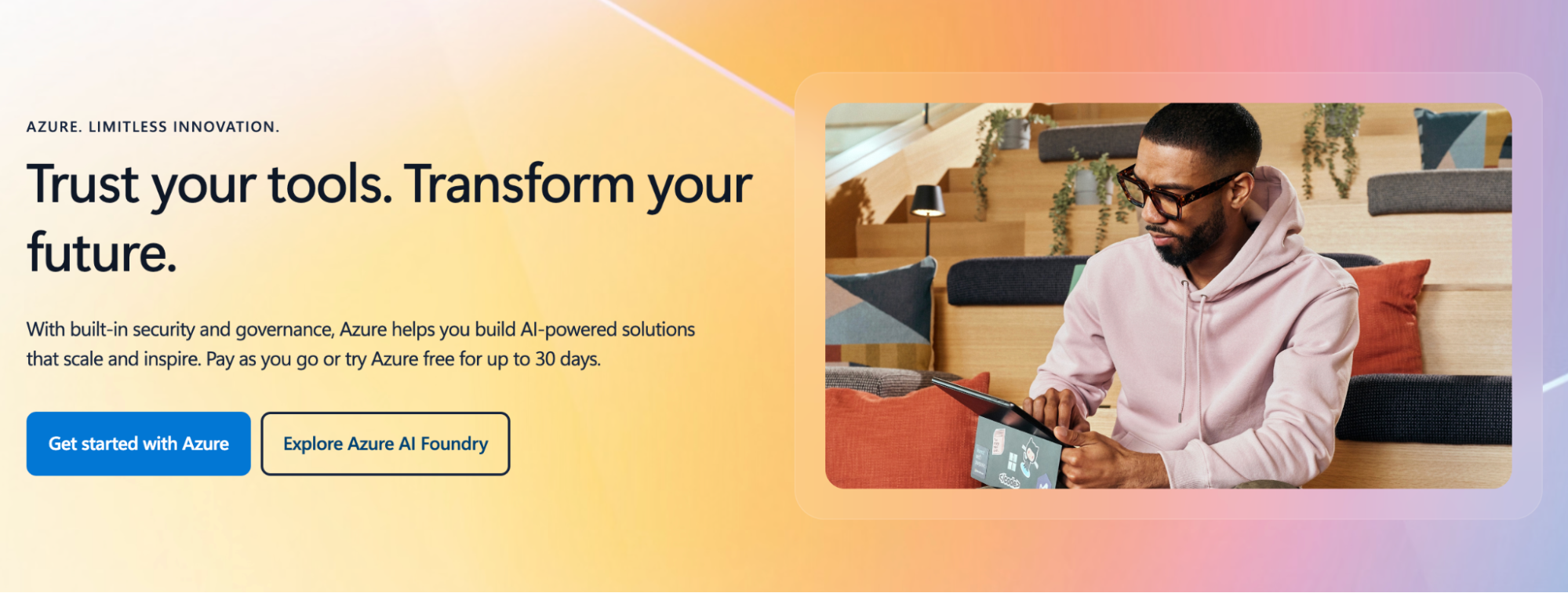
Microsoft Azure is a hyperscaler that provides virtual machines, application hosting, storage, and managed services across a globally distributed infrastructure. The platform is closely integrated with Microsoft’s software ecosystem, including Windows Server, SQL Server, and related enterprise tools, which can simplify deployment for organizations already using those products. Its broad service catalog enables a wide range of application architectures, but this breadth can add complexity when selecting services and estimating costs. Azure offers global scale and deep enterprise integration, though teams focused primarily on Linux-first or infrastructure-centric workflows may prefer Azure alternatives.
Azure provides managed AI and machine learning capabilities through Azure AI Foundry and related services that support model development, training, deployment, and agent-based workflows. These services are tightly integrated with Azure’s compute, data, and identity platforms.
Microsoft Azure key features:
-
Core infrastructure services built around Azure Virtual Machines and Azure Storage as the base for compute and data workloads.
-
Application hosting through Azure App Service and managed container services for deploying web and API workloads.
-
Platform services for data and AI workloads, including Azure SQL and Azure AI Foundry, integrated with identity and management tooling.
Microsoft Azure pricing:
-
Virtual machines: $6.132/month for basic B2ts v2 series (pay-as-you-go pricing)
-
Azure App Service: $0 for F1 Free Plan; $9.49/month per site for D1 Shared Plan
-
Cloud GPUs (H100): $8.820/hour for NC40ads H100 v5 with 40 vCPUs, 320 GB RAM, 3576 GB temporary storage
For teams comparing Hetzner to larger platforms, cost predictability is often a deciding factor. Azure’s pricing can escalate quickly due to bandwidth charges and support add-ons—making it harder to forecast spend as you scale. For a closer look at what drives those spikes, see our breakdown of Azure’s expensive pricing.
8. Google Cloud Platform (GCP) for data-, analytics-, and AI-driven workloads
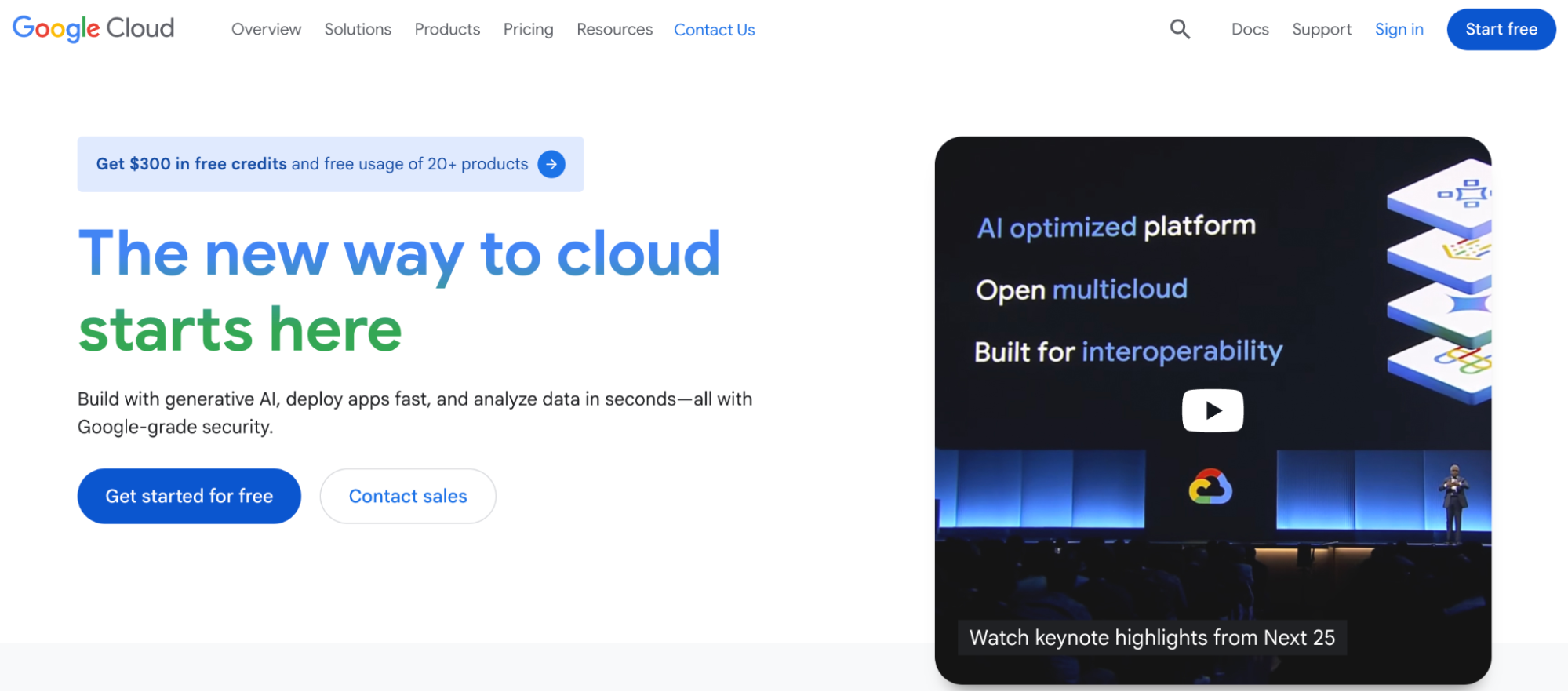
Google Cloud Platform (GCP) is a cloud provider offering compute, storage, networking, and managed services built on Google’s global infrastructure. The platform places a strong emphasis on data analytics, machine learning, and AI-driven workloads, with VM options that support GPU acceleration for compute-intensive use cases. GCP’s service portfolio enables a wide range of architectures, but its breadth and pricing models can introduce complexity for teams unfamiliar with its tooling. Data transfer and network usage costs may also become a consideration for applications with high outbound traffic. GCP offers advanced managed and data-focused services, though with more abstraction and cost planning requirements than infrastructure-centric providers, prompting some to explore Google Cloud Platform alternatives.
Google Cloud Platform key features:
-
Core infrastructure services centered on Compute Engine and Cloud Storage for running virtual machines and storing application data.
-
Managed application runtimes through Google App Engine and container-based deployment options for web and API workloads.
-
Data, analytics, and machine learning services such as BigQuery and Vertex AI, integrated with GCP’s compute and networking stack.
Google Cloud Platform pricing:
-
Compute Engine: $6.11/month for e2-micro shared instance with 2 vCPUs and 1 GiB RAM
-
App Engine: $0.05–$0.10/hour per instance, depending on environment (Standard or Flexible) and instance class, with free tier quotas available
-
GPU instances: $88.49/hour on-demand for A3-highgpu-8g instance with 8 GPUs, 208 vCPUs, and 1872 GiB RAM
With GCP, navigating 100+ services and deciphering billable components can become a project of its own. Teams that don’t need heavy enterprise tooling often benefit from a platform built around clarity instead of complexity. Learn more in our DigitalOcean vs Google Cloud Platform guide.
9. Oracle Cloud Infrastructure (OCI) for Oracle-centric and hybrid enterprise environments
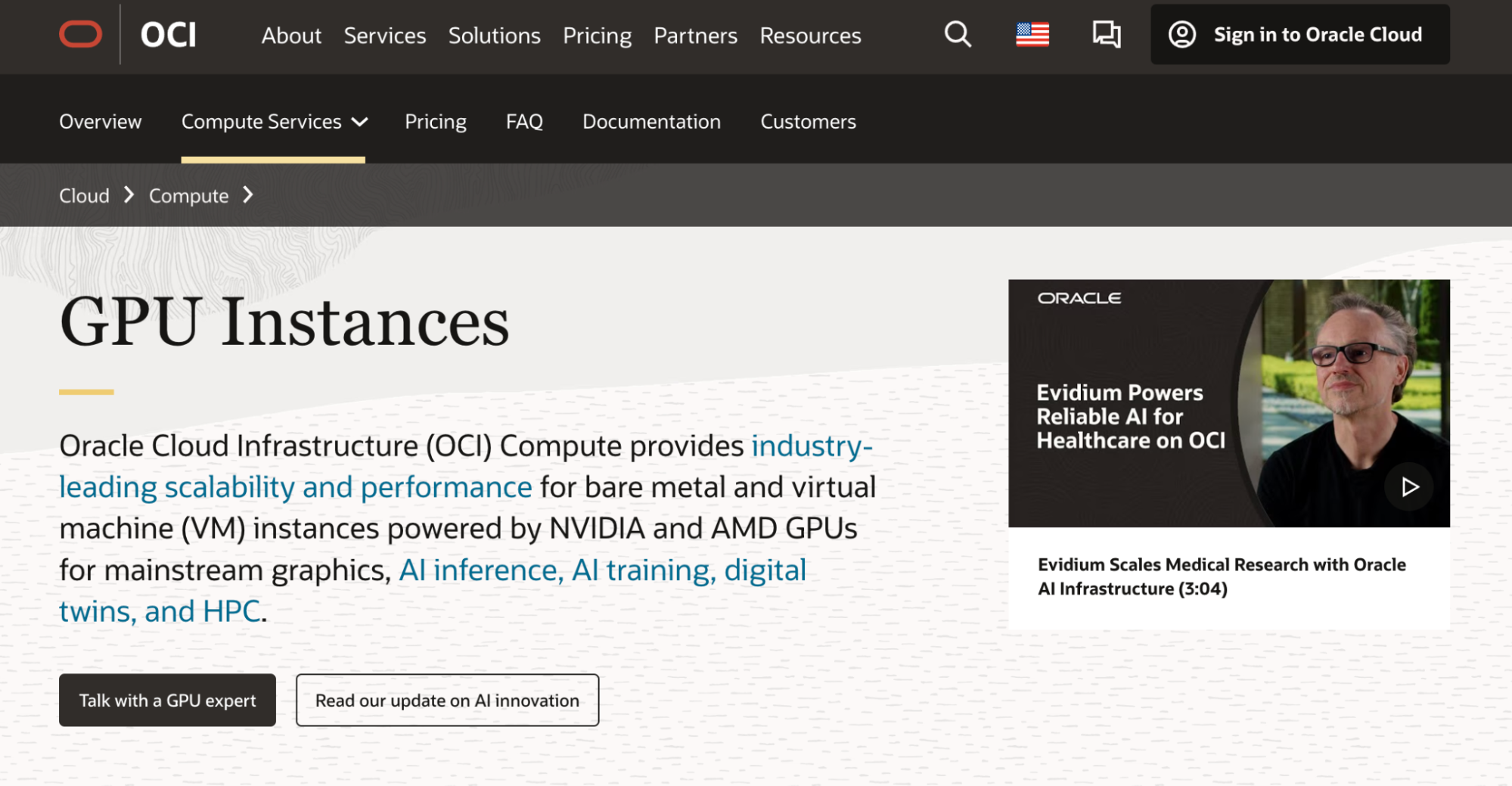
Oracle Cloud Infrastructure (OCI) is an enterprise-focused cloud platform designed to support both cloud-native and legacy workloads. It offers virtual machines, container services, and GPU-enabled instances, with compatibility for common open-source technologies such as Kubernetes and Linux. OCI is tightly integrated with Oracle’s database and application ecosystem, which can streamline deployments for organizations already using Oracle software. The platform also supports direct interconnection with Microsoft Azure for certain hybrid and multi-cloud use cases. It provides enterprise integration and hybrid-cloud options, though its close alignment with Oracle technologies may affect long-term portability.
Oracle Cloud Infrastructure key features:
-
Core infrastructure services based on OCI Compute and OCI Object Storage for virtual machines and application data.
-
Managed Kubernetes via Oracle Container Engine for Kubernetes (OKE) integrated with OCI networking and identity services.
-
Enterprise-oriented cloud design supporting hybrid deployments and integration with existing on-premises environments.
Oracle Cloud Infrastructure pricing:
-
Compute instances: Starting at $7.00/month for a basic VM shape with 1 vCPU and 1 GB RAM (pay-as-you-go pricing, varies by region and shape)
-
Container workloads: Kubernetes control plane is provided at no additional cost; users pay for underlying compute resources consumed by worker node
-
GPU instances: ~$2.40/hour starting for GPU-enabled compute with NVIDIA GPUs (pricing varies by GPU model, shape, and region)
10. IBM Cloud for regulated industries needing hybrid cloud governance
IBM Cloud is an enterprise-focused cloud platform that offers IaaS, PaaS, and SaaS capabilities for organizations with complex operational requirements. The platform integrates closely with IBM’s hardware and software ecosystem, supporting workloads across public, private, and on-premises environments. IBM Cloud places a strong emphasis on hybrid cloud and enterprise governance, which can be useful for regulated industries or legacy application modernization. At the same time, its breadth of tooling and configuration options may introduce added complexity for smaller teams. This makes IBM Cloud more suitable for organizations prioritizing hybrid or enterprise architectures over simplicity or cost-focused infrastructure.
IBM Cloud key features:
-
Core infrastructure services through IBM Cloud Virtual Servers for VPC and IBM Cloud Object Storage for running virtual machines and managing application data.
-
Container orchestration via IBM Cloud Kubernetes Service, integrated with IBM Cloud networking, identity, and security services.
-
A hybrid-cloud–oriented platform architecture aligned with enterprise governance, compliance, and multi-environment operations.
IBM Cloud pricing:
-
Virtual Servers for VPC: $53.29/month for nxf-2x1 Flex instance with 2 vCPUs, 1 GB RAM, and 2 Gbps bandwidth
-
GPU instances: $85.00/hour for GPU virtual server instance with 8x H100 GPUs, 160 vCPUs, 1792 GiB RAM, 61440 GB storage, and 200 Gbps network
11. Alibaba Cloud for Asia Pacific and China-focused deployments
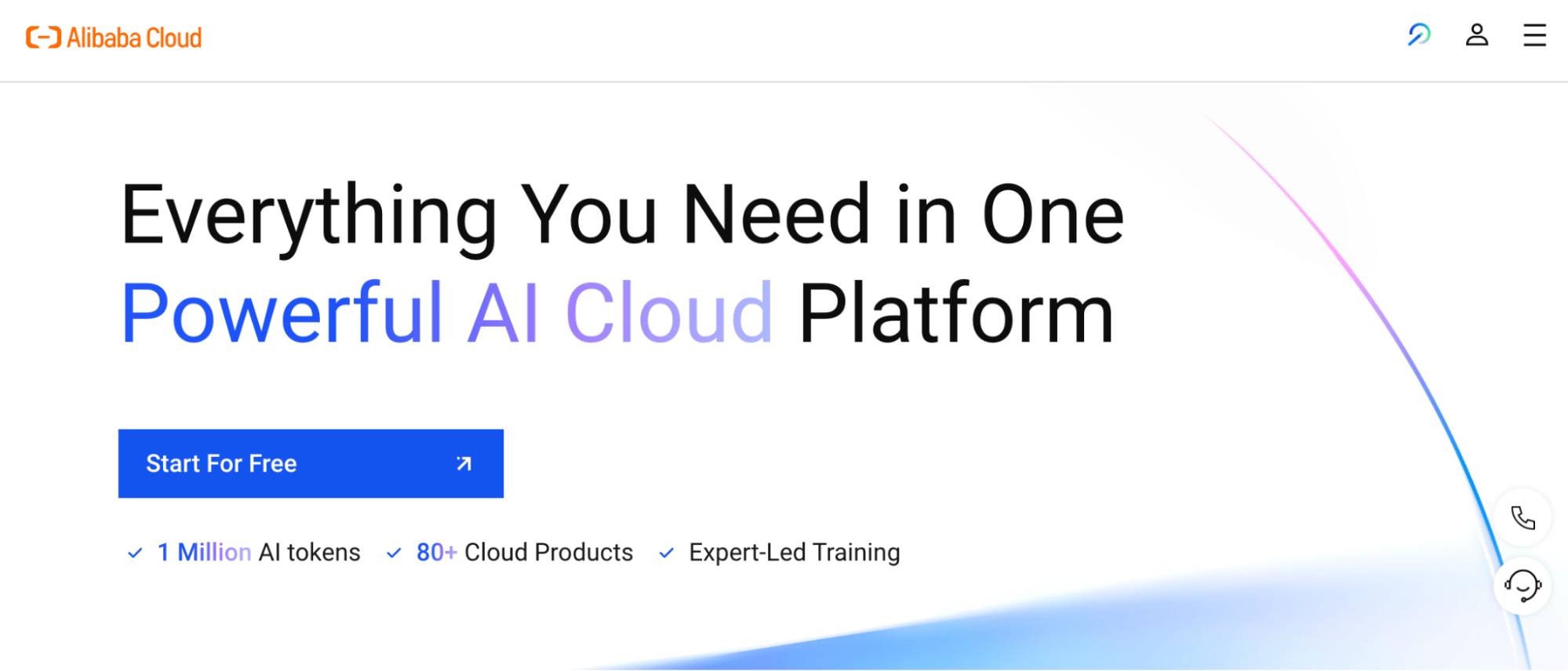
Alibaba Cloud is a cloud provider with a strong regional focus on Asia Pacific, particularly China and neighboring markets. The platform supports a broad range of application and infrastructure workloads, with services designed to align with regional regulatory, networking, and operational requirements. Its ecosystem is closely tied to Alibaba’s broader technology stack, which can simplify deployments for organizations already operating within that environment. Alibaba Cloud is commonly used by businesses serving users in Asia or expanding into those markets. For teams whose workloads are primarily outside the region, its geographic concentration and ecosystem orientation may be less aligned with global deployment strategies.
Alibaba Cloud key features:
-
Core infrastructure services based on Elastic Compute Service (ECS) and Object Storage Service (OSS) for virtual machines and application data.
-
Application runtimes via Serverless App Engine and managed container services for web and microservices workloads.
-
Platform oriented around Asia Pacific deployments, with services aligned to regional networking, compliance, and ecosystem integration requirements.
Alibaba Cloud pricing:
-
ECS instances: $4.55/month starting for economy instance e with 2 cores, 0.5G memory, 40 G Standard ESSD, and 200Mbps bandwidth
-
Serverless App Engine: $0.000006859/CU starting for pay-as-you-go, or $6.85/year starting for resource plans with 1 million CU
-
GPU instances: $2.26/hour for ecs.gn8is.2xlarge GPU-accelerated compute-optimized instance with 8 vCPUs and 64 GiB RAM
Note: Pricing and feature information in this article are based on publicly available documentation as of January 2026 and may vary by region and workload. For the most current pricing and availability, please refer to each provider’s official documentation.
Hetzner alternatives FAQs
Which cloud providers offer similar pricing to Hetzner?
Specialized providers offer the most comparable cost structure to Hetzner, whose cloud servers start around $4.09/month for a cost-optimized shared vCPU instance. DigitalOcean is highly competitive, offering its basic virtual machines (Droplets) starting at $4/month. In contrast, hyperscalers typically have higher starting prices and more complex, granular billing that can lead to higher overall costs.
Which Hetzner alternatives provide bare-metal or dedicated servers?
Hetzner is a popular choice for dedicated hardware, and alternatives like OVHcloud and Vultr also focus heavily on bare-metal and dedicated infrastructure. OVHcloud provides highly configurable dedicated servers and hosted private cloud options for isolated deployments. DigitalOcean, while primarily focused on virtual machines, offers specialized bare metal GPUs designed for demanding AI/ML workloads that require dedicated, non-virtualized hardware access.
What are the support and SLA differences among Hetzner alternatives?
DigitalOcean stands out by providing a high level of 24/7 technical assistance and backing its core services with a strong 99.99% uptime SLA. Hyperscalers like AWS typically provide support through paid support tiers, which may influence how smaller or cost-sensitive teams interact with the platform. When evaluating alternatives, look closely at the SLAs to confirm the provider’s performance guarantees and investigate their history of consistent service delivery.
How can I migrate my infrastructure from Hetzner to another provider?
Migrating infrastructure requires a careful analysis of the new provider’s data portability options and any migration support they offer to prevent getting locked into a restrictive vendor ecosystem. Given that Hetzner appeals to teams that prefer greater infrastructure control, the migration process will require a hands-on approach to manage the stack yourself. Ultimately, evaluate the alternative’s service dependencies and its capability for strong integration with any existing cloud services or software you currently use.
How do I choose the right Hetzner alternative for my business needs?
To select the correct alternative, you must consider security certifications, the vendor’s financial stability, and its ability to scale with modern solutions like managed databases and Kubernetes. It is crucial to evaluate the total cost of ownership, particularly egress costs associated with moving data out of the provider’s network, which can be a significant hidden expense. DigitalOcean is an intuitive choice for businesses seeking a developer-centric platform that combines integrated solutions with simple, predictable pricing.
DigitalOcean: The scalable Hetzner alternative for modern workloads
DigitalOcean bridges the gap between budget-focused providers like Hetzner and complex hyperscalers. For businesses that need more than just raw compute—such as managed services, reliability at scale, and cutting-edge AI infrastructure—DigitalOcean offers a complete ecosystem designed for growth.
While Hetzner provides basic cost-efficiency, DigitalOcean excels by offering a platform where you can build, deploy, and scale without hitting an infrastructure ceiling.
DigitalOcean excels across various fronts, including:
-
Superior customer support: With 24/7 technical assistance and dedicated support options, DigitalOcean ensures prompt resolution of queries.
-
Developer-centric approach: Our documentation and tutorials support the user experience, setting a benchmark in the cloud hosting industry.
-
Integrated solutions: From App Platform to Managed Databases to serverless computing via DigitalOcean Functions, the platform offers a comprehensive suite of services.
-
Global reach: With data centers spanning nine regions, DigitalOcean ensures minimal latency worldwide.
With a blend of support excellence, an intuitive interface, comprehensive features, and global reach, DigitalOcean is a compelling alternative to Hetzner.
The limitations of dedicated servers—common with providers like Hetzner—often stifle growth. Ghost, the world’s most popular open-source publishing platform, faced this exact challenge with their previous bare metal provider. They dealt with hardware lead times of up to two months just to add capacity, threatening their ability to handle traffic spikes.
By migrating to DigitalOcean, Ghost gained the ability to spin up new instances in nearly 55 seconds. Today, DigitalOcean’s infrastructure allows Ghost’s small team to serve billions of requests for thousands of creators without worrying about hardware logistics.
Ready to upgrade your infrastructure?
Get started with DigitalOcean to simplify your cloud infrastructure and build the next big thing.
Any references to third-party companies, trademarks, or logos in this document are for informational purposes only and do not imply any affiliation with, sponsorship by, or endorsement of those third parties.
*This “best for” information reflects an opinion based solely on publicly available third-party commentary and user experiences shared in public forums. It does not constitute verified facts, comprehensive data, or a definitive assessment of the service.
About the author

Maddy Osman is a Senior Content Marketing Manager at DigitalOcean.
Get started for free
Sign up and get $200 in credit for your first 60 days with DigitalOcean.*

*This promotional offer applies to new accounts only.